Classification of pipes and fittings and general knowledge
I. Piping system overview.
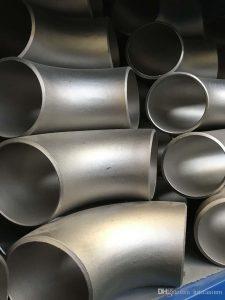
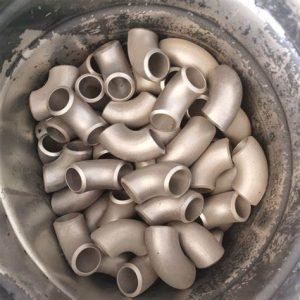
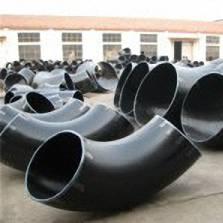
In order to transport liquids or gases, a variety of pipelines must be used, in addition to straight pipes with steel pipes, but also use a variety of pipe fittings: pipe bend must be used elbow, pipe reducer to use the size of the head, bifurcation to use a tee, pipe joints and joints connected to the flange, in order to open the purpose of the transport medium, but also with a variety of valves, in order to reduce the heat expansion and contraction or frequent vibration on the pipeline system, but also the impact of expansion joints. Also use expansion joints. In addition, in the pipeline, there are a variety of instrumentation connected with a variety of joints ﹑ plugs and so on. We are accustomed to the pipeline system in addition to the straight pipe other accessories collectively referred to as pipe fittings.
II. General knowledge of metal materials.
Metal materials are the most widely used materials in our daily life and industry. It is mainly divided into steel, iron and non-ferrous metals and other categories, and steel is the most widely used materials, the main component of steel is iron, the rest is artificially added alloying elements and various impurities. It is because of the different varieties of these added alloying elements. The number of different to form a variety of steel, such as ordinary carbon steel, stainless steel, alloy steel, etc., in these added elements, carbon C plays a very important role.
2.1 Common chemical elements in steel.
A variety of steel in the majority of the percentage of iron (Fe ), in addition, usually contains the following elements (usually called the alloying elements in steel): C (carbon) Si (silicon) Mn (manganese) P (phosphorus) S (sulfur) and Cr (chromium) Ni (nickel) Mo (molybdenum) Ti (titanium) V (vanadium) and so on. In general, where P, S for impurity ingredients, the lower the quality of steel, the better.
2.2 Classification of steel.
According to the different varieties of alloying elements added to the steel, we can simply divide the steel into three categories: carbon steel. Alloy steel. Stainless steel.
(1) carbon steel: where the alloying elements are only C, Si, Mn, P, S five, which in accordance with the P, S impurity content, and divided into ordinary carbon steel (P, S generally ≤ 0.040%) and excellent carbon steel (P, S generally ≤ 0.03%)
Common steel grades are: common carbon steel: Q215A.Q235BF.Excellent carbon steel: 20#.45#.16Mn, etc.. This steel strength and toughness in general, not corrosion-resistant, can be used for the occasion of the requirements are not high, the lowest cost.
(2) alloy steel: in addition to the five elements contained in carbon steel, but also added less than 10% of Cr Mo V and other elements, common steel grades are: 15CrMo 12Cr1MoV 1Cr5Mo, etc.. Compared with carbon steel, alloy steel higher strength, temperature resistance performance is also improved, but corrosion resistance is still poor, therefore, alloy steel is usually used in high temperature and high pressure occasions, such as boiler steel, power plant hot steam transmission, etc., the use of cost in the medium level.
(3) stainless steel: usually on the basis of carbon steel. Add a high proportion of Cr, Ni and other alloys and become, the proportion of content up to 20% or more. Common steel grades are: 304, 304L, 321, 316, 316L, 1Cr18Ni9Ti, the first few steel numbers with numbers for Japan, the United States steel number, the last (1Cr18Ni9Ti) for the domestic steel number method of expression. The following numerical representation of steel number as an example of the relationship between several stainless steel components: as a general understanding, but also for the convenience of beginners to remember, we can think of it this way (but not very accurate statement)
304-—— basic type of steel, containing only (C<0.08%), Cr (~18%), Ni (~9%)
304L —– ultra-low carbon C 304 (C<0.05%) is called 304L
321 ——- 304 + Ti (~0.5%)
316 ——- 304 + Mo (~2.5%)
316L —– 316 with ultra-low carbon C (C<0.05%) is called 316L
Stainless steel strength, toughness index is the best of all kinds of steel, its most special advantage is corrosion resistance, in the chemical industry and paper and other corrosive occasions must use stainless steel, of course, its cost is also the highest.
2.3. The performance of steel is expressed.
A steel performance is good or bad, always use some indicators to reflect, to indicate. For steel, we usually use its chemical composition, mechanical properties of the value to reflect its quality and performance. The mechanical properties usually have three indicators.
Tensile strength (σb, TS): the maximum external tensile force that the material can withstand when it is pulled.
Yield strength (σs, YS): the minimum external tensile force that the material can withstand when plastic deformation occurs.
Elongation ( ψ, EL): the percentage of the material that extends in the length direction after pulling off, the larger this value is, the better the plasticity of the material. Sometimes, the hardness value, impact toughness value, etc. are also used to reflect the material properties.
Our most common carbon steel 20 #, Q235 and foreign SS400, SS41, St37, etc., their performance is very close, or can basically replace each other, their relevant parameters are roughly as follows.
C: 0.18-0.21% Si: 0.30% Mn: 0.5% P, S 0.025%
TS: ~550Mpa YS: ~260Mpa EL: ~25%
2.4 Steel organization and its variations
The reason why there are differences in the properties of steel is actually related to the internal organization of the steel. It can be seen through the microscope that the internal structure of steel is made up of many different cell-like lumps, and upon closer inspection, these lumps actually belong to several different categories, and we usually refer to the same type of lump as a “phase” or a “body “. As we usually say austenite, ferrite is the two most common organization structure in steel, that is, two phases. A steel contains which phase, each phase accounted for the proportion of how much, how the phase form, these are directly affect the performance of steel. In other words, if the type, proportion, and form of the phases in steel change, the properties of the steel will change accordingly. Then, what factors will contribute to these changes over the years? Obviously, changes in the composition of the steel will certainly affect the change in steel properties, and for a fixed composition of a steel, such as 20# steel, or 304L, when they are processed for deformation, heat treatment, its properties will also change. In summary, the main factors affecting the performance of steel are: composition, deformation and temperature.
2.5 Heat treatment of steel.
In order to make a certain steel to achieve the best performance we want, it must be made to stabilize its internal organization in a certain stable structural state.
In many cases, we have to heat treat the steel. Because many of our products are processed and deformed, as mentioned above by the deformation of the steel, its organization will change, that is, the steel properties change, and this change is often unwanted, then we must take the heat treatment to eliminate these changes, to restore the original characteristics of steel. Of course, we also have other ways of heat treatment because of other considerations. Several types of steel are heat treated after cold and hot deformation, see Table 1.
2.6 Steel numbering methods.
The world’s steel number expression method is not the same, but most according to two types of methods to express: a class to contain the elements of the alloy and its content to express, a class to steel grade code and strength values to express. For example.
20# – said that the carbon content of about 0.20% of carbon steel
45# – indicates that the carbon content is about 0.45% of carbon steel
1Cr18Ni9Ti – indicates the carbon content: 0.1% or less
Cr 18% or so, Ni 9% or so, Ti: contains a little
0Cr18Ni9-indicates very low carbon content, ≤0.08%
Cr 18% or so, Ni 9% or so
Q235 —– indicates the yield strength > 235 MPA of ordinary carbon steel
SS400 – indicates that the tensile strength > 400MPA superior carbon steel
2.7 Common steel code, composition performance
According to the three categories of carbon steel, alloy steel, stainless steel, we summarize as shown in Exhibit 2.
III. General knowledge of piping systems
3.1 Pipeline commonly used materials.
Commonly used raw materials in the pipeline are: plates, pipes and forgings.
(1) plate: common plates are rolled, flat and open plate. Coil plate is usually delivered in rolls, the advantage is that you can intercept any length as needed, the disadvantage is that you must have the corresponding uncoiling equipment, plate surface flatness in general. Flat sheets are usually delivered in sheets, the advantage is that the surface is flat and easy to transport, the disadvantage is that sometimes the utilization rate of the sheet is low. Open plate is made by shearing the rolled plate into a block after the plate surface is flattened. Distinguish between flat plate and open plate method, in addition to observing its surface and edge flatness, smoothness, there is a simple method: the real flat plate, each with steel factory markings, such as manufacturers, specifications, steel number and other words, and in the open plate on the absence of these marks. Plate theoretical weight calculation formula is.
Carbon steel plate theoretical weight = length * width * thickness * 7.85/106 (mm for the unit, the weight of the metric details)
Stainless steel plate theoretical weight = length * width * thickness * 7.91/106 (mm as a unit, weight in kg)